Exploit Prediction Scoring System (EPSS)
- EPSS
- Prioritisation
- Machine learning
- CVE
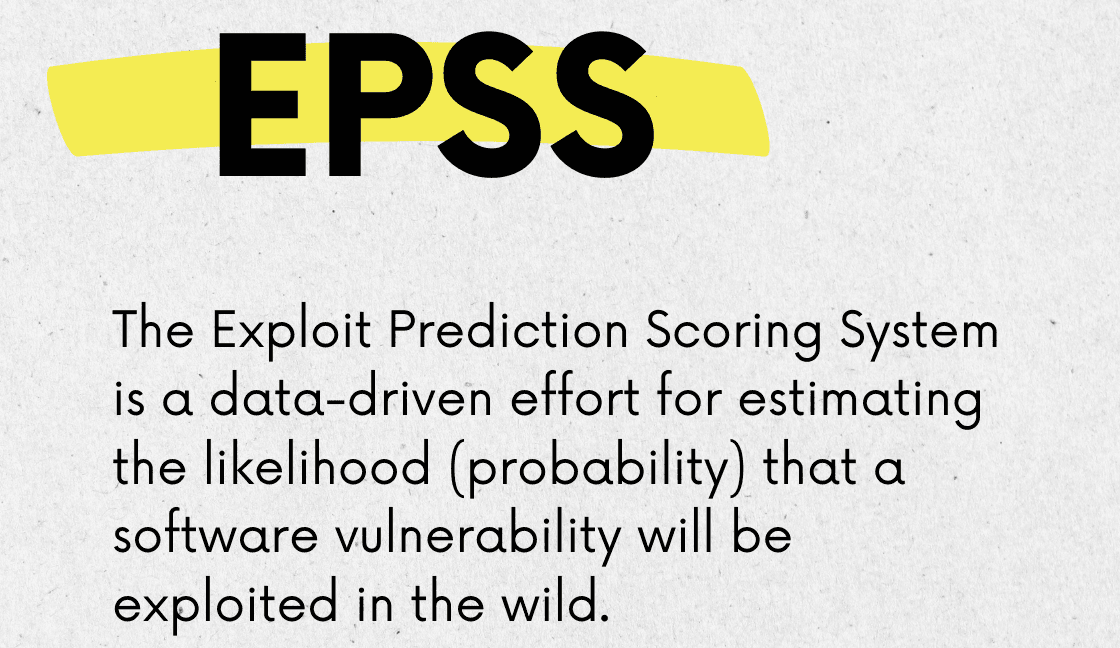
EPSS assigns each vulnerability a probability of being exploited in the wild. Here is how that score is calculated, what drives it, and where its limits lie.
Introduction
The Exploit Prediction Scoring System (EPSS) is a powerful tool that helps security teams prioritize vulnerabilities based on their likelihood of being exploited in the wild. By assigning a probability score between 0 and 1, EPSS provides valuable insights into the potential risk posed by each vulnerability. In this article, we will delve into the intricacies of EPSS calculation and explore the factors that contribute to its scoring methodology.
Understanding the EPSS Calculation Process
Data Collection
- Vulnerability Databases
- EPSS gathers data from comprehensive databases such as the Common Vulnerabilities and Exposures (CVE) database, which contains detailed information about known vulnerabilities.
- Threat Intelligence Feeds
- Real-time threat intelligence feeds provide insights into the latest attack techniques, exploit code, and attacker behaviors.
- Historical Exploit Data
- Historical data on past exploits helps to identify patterns and trends in attacker behavior.
- Software Usage Data
- Information about the prevalence of software and its configurations is essential for assessing the potential impact of a vulnerability.
Feature Engineering
- Vulnerability Characteristics
- Features such as severity, age, and the CVSS score are extracted from the vulnerability data.
- Exploit Indicators
- Indicators of exploit activity, such as the presence of exploit code, discussions on hacking forums, and the involvement of advanced persistent threat (APT) groups, are considered.
- Software and Environmental Factors
- Factors like the popularity of the affected software, the existence of patches, and the operating system environment are included in the feature set.
Model Training
- Machine Learning Algorithms
- EPSS employs advanced machine learning algorithms, such as random forests, gradient boosting, and neural networks, to learn the relationships between features and the likelihood of exploitation.
- Labeled Dataset
- The model is trained on a labeled dataset where each vulnerability is associated with a ground truth label indicating whether it was actually exploited.

Score Generation
- Probability Estimation
- The trained model generates a probability score for each new vulnerability, representing the estimated likelihood of exploitation.
- Score Calibration
- The scores are calibrated to ensure that they are comparable across different vulnerabilities and time periods.
Factors Influencing EPSS Scores
Several factors influence the EPSS score, including:
- Vulnerability Severity
- Higher severity vulnerabilities are generally more likely to be exploited.
- Age of the Vulnerability
- Older vulnerabilities may have been exploited more frequently and may have more publicly available exploit code.
- Popularity of the Affected Software
- Vulnerabilities in widely used software are more attractive targets for attackers.
- Availability of Exploit Code
- The existence of publicly available exploit code significantly increases the likelihood of exploitation.
- Threat Actor Activity
- The activity of specific threat actors can influence the likelihood of exploitation for certain types of vulnerabilities.
- Patch Availability and Adoption
- The availability of a patch and the rate at which it is adopted by users can impact the risk associated with a vulnerability.
Limitations and Considerations
While EPSS is a valuable tool, it is essential to understand its limitations. Some of these include:
- Data Quality
- The accuracy of EPSS scores depends heavily on the quality and completeness of the underlying data.
- Evolving Threat Landscape
- The threat landscape is constantly evolving, and EPSS models may need to be retrained frequently to remain effective.
- False Positives and Negatives
- EPSS may produce false positives (predicting exploitation when it does not occur) or false negatives (failing to predict exploitation).
Conclusion
EPSS provides a data-driven approach to prioritizing vulnerabilities and helps organizations make informed decisions about their security posture. By understanding the factors that influence EPSS scores and the limitations of the system, security teams can effectively leverage EPSS to improve their overall security posture.
A Deep Dive into Exploit Prediction Scoring Systems
Introduction
- The Challenge of Zero-Day Exploits
- Discuss the increasing frequency and sophistication of zero-day exploits.
- The Limitations of Traditional Vulnerability Scanning
- Explain why traditional vulnerability scanning is often insufficient to prevent targeted attacks.
- The Promise of Exploit Prediction
- Introduce the concept of exploit prediction scoring systems and their potential benefits.
Understanding Exploit Prediction Scoring Systems
Key Components:
- Vulnerability Scoring
- Explain how vulnerabilities are scored based on factors like CVSS.
- Exploitability Assessment
- Discuss techniques for assessing the likelihood of a vulnerability being exploited.
- Impact Analysis
- Describe how to evaluate the potential impact of a successful exploit.
Machine Learning Techniques:
- Supervised Learning
- Explain how historical data can be used to train models to predict exploitability.
- Unsupervised Learning
- Discuss the use of unsupervised learning to identify patterns in vulnerability data.
- Reinforcement Learning
- Explore the potential of reinforcement learning for adaptive exploit prediction.
Building an Effective Exploit Prediction Scoring System
Data Sources:
- Vulnerability Databases
- Discuss the importance of comprehensive vulnerability databases.
- Threat Intelligence
- Explain how threat intelligence can be used to enrich vulnerability data.
- Exploit Code Analysis
- Discuss techniques for analyzing exploit code to identify patterns.
Feature Engineering:
- Relevant Features
- Identify the most important features for predicting exploitability.
- Feature Selection
- Discuss techniques for selecting the optimal set of features.
Model Selection and Evaluation:
- Evaluation Metrics
- Explain how to evaluate the performance of exploit prediction models.
- Model Selection
- Discuss techniques for selecting the best model for a given dataset.
Applications and Use Cases
- Prioritizing Vulnerability Remediation
- Explain how exploit prediction can help organizations prioritize patching efforts.
- Incident Response
- Discuss how exploit prediction can be used to detect and respond to attacks more effectively.
- Threat Hunting
- Explain how exploit prediction can be used to proactively identify potential threats.
Challenges and Future Directions
- Data Quality and Quantity
- Discuss the challenges associated with obtaining and cleaning large datasets.
- Evolving Threat Landscape
- Explain how exploit prediction models must adapt to new threats.
- False Positives and Negatives
- Discuss the trade-offs between precision and recall.
- Explainable AI
- Explore the need for explainable AI in exploit prediction systems.
Conclusion
- Summary of Key Points
- Recap the main ideas presented in the article.
- Future Outlook
- Discuss the potential future directions for exploit prediction research.
Additional Considerations
- Case Studies
- Consider including case studies of organizations that have successfully deployed exploit prediction systems.
- Ethical Implications
- Discuss the ethical implications of exploit prediction, such as the potential for misuse.
- Open Source Tools
- Highlight any open source tools or frameworks that can be used to build exploit prediction systems.
By following this outline and incorporating the suggested titles, you can create a comprehensive and informative article on exploit prediction scoring systems.
Would you like me to elaborate on any of these points or provide additional information?
Here are some additional questions to consider:
- What is the specific focus of your article? Are you targeting a technical or general audience?
- What is the level of detail you want to provide on the machine learning techniques involved?
- Are there any specific exploit prediction tools or platforms you want to highlight?