Continuous Security Validation: Keeping Defenses Alive 24/7
- Continuous validation
- DevSecOps
- Purple teaming
- KPIs
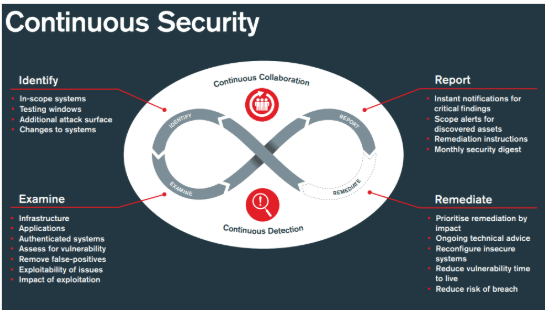
Annual penetration tests reflect security posture at a single moment. Continuous Security Validation tests and validates defences on an ongoing basis instead.
Introduction
Traditional penetration testing provides value, but it is inherently limited by time. Conducted once or twice a year, it reflects security posture only at that moment.
Meanwhile, new vulnerabilities appear daily, adversaries adapt, and IT environments evolve constantly. To bridge this gap, security leaders are adopting Continuous Security Validation (CSV) — a proactive approach where defences are tested and validated on an ongoing basis.
What is Continuous Security Validation?
Continuous Security Validation is the practice of regularly simulating real-world attacks and testing security controls to ensure they remain effective.
Key pillars of CSV
- Threat simulation
- Emulating adversary behaviours in production-like environments.
- Vulnerability validation
- Verifying whether vulnerabilities are truly exploitable.
- Defense measurement
- Confirming whether security tools and teams detect and respond as expected.
Why one-time pentests fall short
| Aspect | Traditional pentest | Continuous validation |
|---|---|---|
| Frequency | Once or twice a year | Ongoing / scheduled |
| Scope | Predefined | Dynamic, evolving |
| Goal | Identify vulnerabilities | Validate defence efficacy |
| Value | Snapshot in time | Real-time resilience check |
Relying solely on annual assessments leaves months of blind spots. CSV ensures constant visibility.
Benefits of Continuous Security Validation
- Reduced risk exposure
- Detect exploitable vulnerabilities before attackers do.
- Faster remediation (MTTR)
- Continuous testing shortens the time between discovery and fix.
- Compliance support
- Demonstrates ongoing diligence for standards like PCI DSS, ISO 27001, and SOC 2.
- Operational confidence
- Security leaders gain evidence-backed assurance that defences work as intended.
Continuous validation in DevSecOps
In modern software pipelines, security must shift left. CSV aligns perfectly with DevSecOps by integrating into CI/CD workflows:
- Pull request stage
- Lightweight scans (SAST, SCA) for rapid feedback.
- Pre-merge stage
- Container and dependency checks.
- Nightly builds
- Deeper dynamic scans and attack simulations.
- Production adjacent
- Scheduled real-world attack simulations against staging environments.
Automation platforms can trigger these checks automatically, blocking risky builds or creating remediation tickets when critical issues are found.
Advanced use cases
- Threat intelligence-driven validation
- When new IOCs or exploits surface, tests are automatically launched to check exposure.
- Attack path analysis
- Validating potential lateral movement paths to critical assets — the crown jewels.
- Continuous purple teaming
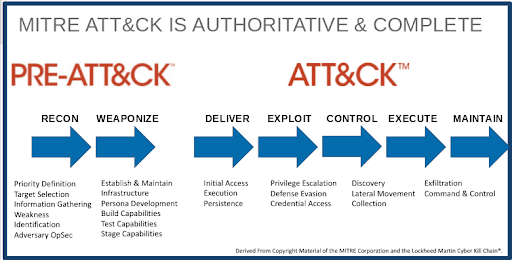
- Red and blue teams align around regular, automated ATT&CK simulations.
Practical adoption roadmap
- Phase 1 — Pilot (0–3 months)
- Run CSV on a limited scope, for example a single application.
- Phase 2 — Expansion (3–6 months)
- Integrate into CI/CD pipelines and SOC processes.
- Phase 3 — Maturity (6–12 months)
- Scale to enterprise-wide coverage, integrate with SIEM and ticketing systems, and measure KPIs.
KPIs to track
- Mean Time to Detect (MTTD)
- Mean Time to Remediate (MTTR)
- Percentage of techniques successfully detected, mapped to ATT&CK
Conclusion
Cyber threats don't wait for annual assessments, and neither should security teams. Continuous Security Validation transforms defence testing from a point-in-time exercise into a living, breathing process.
By embedding CSV into daily operations, organizations gain confidence that their defences are not just deployed — but truly effective.